-
Featured News
Don’t Forget Me – Eddie Cochran documentary set for 2026
 By Harvey Kubernik
Eddie Cochran, guitarist, singer, and songwriter was a pioneering rock and roll icon who left an indelible mark on countless musicians. Dying and just age 21 in 1960, h
By Harvey Kubernik
Eddie Cochran, guitarist, singer, and songwriter was a pioneering rock and roll icon who left an indelible mark on countless musicians. Dying and just age 21 in 1960, h -
Featured Articles
Donovan's Sunshine Superman at 60
 By Harvey Kubernik
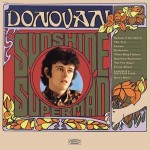
Sunshine Superman is the third studio LP by singer-songwriter Donovan. On August 26, 1966, it was released in the United States on Epic Records.
Donovan and his recor
By Harvey Kubernik
Sunshine Superman is the third studio LP by singer-songwriter Donovan. On August 26, 1966, it was released in the United States on Epic Records.
Donovan and his recor -
Lenny Bruce: 60 Years On
By Harvey Kubernik
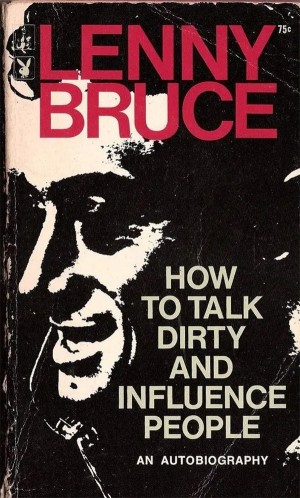
Viewing the uncensored Def Comedy Jam broadcasts on HBO from three decades ago and also seeing the popularity of ribald comedians this century headlining theaters, arenas and stadiums, I’m reminded of the obscenity arrests, trials, and prosecution of comic, storyteller, and freedom of speech advocate Lenny Bruce endured in the sixties for all of them with his stage and recorded routines about race, religion, hypocrisy, politics and sex. He reshaped stand-up comedy. Bruce is the counterculture prophet whose unfiltered style opened up new frontiers in self-expression.
May I recommend reading Steven Armstrong’s July 4, 2026 story in The Telegraph on how Netflix became the home of ‘cancelled’ comedians.
Over half a century ago, critic Ralph J Gleason of the San Francisco Chronicle and a founding editor of Rolling Stone magazine, said, “So many taboos have been lifted, and so many comics have rushed through the doors Lenny opened. He utterly changed the world of comedy.”
In 2003, a court case conviction from 40 years earlier was overturned with a posthumous pardon by New York governor George Pataki, who exonerated Bruce in a statement saying, “a declaration of New York’s commitment to upholding the First Amendment.”
“Lenny Bruce started as a comedian, turned into a prophet, and ended as a martyr,” suggested author and former Grateful Dead publicist Dennis McNally in a 2026 email. McNally in 2025 penned The Last Great Dream: How Bohemians Became Hippies and Created the Sixties.
“Although he used street language, he was never truly obscene. Instead, he pursued a mission to expose fraud, particularly as it manifested in daily sexual and religious life. Unfortunately for him, one of his favorite topics was the Roman Catholic church. A considerable number of district attorneys in America were of that faith, and they took offense because Lenny was indeed blasphemous. They suspended the First Amendment as it applied to him and crucified him with an endless succession of obscenity trials. Broken, he overdosed and died. But his heritage of seeing the lie in daily life affected an entire generation,” summarized McNally.
Bob Dylan’s Blonde On Blonde Turns 60
By Harvey Kubernik
Nearly a half century ago on August 16, 1975 in Orange County, California, I interviewed Johnny Cash for the now defunct UK music weekly Melody Maker at the Royal Inn Hotel in Anaheim when he was touting his autobiography, Man In Black, at a Christian Book Sellers convention.
In our conversation, I asked Cash about Bob Dylan.
“I became aware of Bob Dylan when the Freewheelin’ album came out in 1963. I thought he was one of the best country singers I had ever heard. I always felt a lot in common with him. I knew a lot about him before we had ever met. I knew he had heard and listened to country music. I heard a lot of inflections from country artists I was familiar with. I was in Las Vegas in ’63 and ’64 and wrote him a letter telling him how much I liked his work. I got a letter back and we developed a correspondence.
“We finally met at Newport in 1964. It was like we were two old friends. There was none of this standing back, trying to figure each other out. He’s unique and original. I respect him. Dylan is a few years younger than I am but we share a bond that hasn’t diminished. I get inspiration from him.
“I keep lookin’ around as we pass the middle of the ‘70s and I don’t see anybody come close to Bob Dylan.”
##
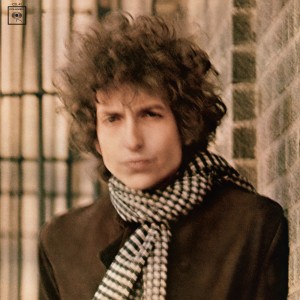
The Bob Dylan Blonde On Blonde Bob Johnston-produced recording sessions began in New York City in October 1965 at CBS studios and relocated to Nashville, Tennessee at the company’s facility until March 10, 1966.
Dylan and Johnston during April ’66 in four days did the bulk of the final monaural mixdown session at Columbia’s studios in Hollywood. A stereo mix was subsequently done in a four-hour booking before the double LP was released to AM radio stations and retail outlets on June 20, 1966.
I bought my first mono copy of Blonde On Blonde at The Frigate record shop in Los Angeles on 8101 W 3rd Street and then the stereo one at Wallichs Music City in Hollywood at 1501 Vine Street.
Opening on July 18, 2026 at The Bob Dylan Center in Tulsa, Oklahoma will be Thin Wild Mercury: Dylan 1966. It’s an immersive multimedia exhibition that captures the spectacle, power and fury of Dylan’s landmark year following his controversial electric performance at the 1965 Newport Folk Festival.
From his fall 1965 US concert dates with The Band, to the recording and release of Blonde On Blonde and the writing of his first novel, Tarantula, to the raucous and defiant 1966 World Tour, Thin Wild Mercury: Dylan 1966 features numerous never-before-seen manuscripts, photographs and newly restored film footage from the era.
Along the way, visitors will experience Dylan’s emergence as a cool and at times combative rock star, rubbing shoulders with the likes of the Beatles, the Stones, Marlon Brando, Françoise Hardy and Andy Warhol, who captured Dylan in two iconic yet seldom-seen screen tests. Visitors will be able to make their own screen tests by way of an interactive Screen Test Machine, on loan from The Andy Warhol Museum in Pittsburgh.
Highlights include: original Blonde On Blonde lyrics including “I Want You” and “One of Us Must Know (Sooner or Later)”; original typescript drafts from Tarantula and associated writings from his mid-’60s oeuvre; never-before-seen photos and documents and footage from the 1966 World Tour; brand-new hour-long film program featuring never-before-seen footage and newly conducted interviews with key figures from the era including Jerry Schatzberg, Richard Alderson and Harvey Brooks.
“The year following Newport is one of the most visually and musically exciting periods of Dylan’s long career,” says Mark Davidson, exhibition curator and senior director of archives and exhibitions at American Song Archives. “With his wild hair, impenetrable sunglasses, and hip tailored suits, Dylan was unequaled in style and attitude. And yet, he bristled at being called a pop star, sparring with the press and audiences alike. It was Dylan and The Band against the world.”
##
Since 1975 I’ve interviewed sound engineers, record producers, session musicians, and photographers who helped create Blonde On Blonde.
I’ve also asked writers, authors, poets, and filmmakers about it.
Don’t Forget Me – Eddie Cochran documentary set for 2026

By Harvey Kubernik
Eddie Cochran, guitarist, singer, and songwriter was a pioneering rock and roll icon who left an indelible mark on countless musicians. Dying and just age 21 in 1960, his unique rebellious spirit and influence still resonate with recording artists, deejays, fans, record collectors and rock music historians.
The first official documentary about him, Don’t Forget Me, is due later this year. Director Kirsty Bell has lensed on-camera interviews with Keith Richards, Rod Stewart, Ronnie Wood, Roger Daltrey, Peter Frampton, Linda Perry, Alan Jackson, Alice Cooper, Sting, Billy Idol, Suzi Quatro, Brian Setzer, Yungblud, Kiefer Sutherland, members of Cochran’s family and additional talking heads. Bell is a UK based filmmaker, producer and executive producer of well over 90 feature films in her career including Executive Producing the 2023 Best Short Film Oscar and BAFTA winner An Irish Goodbye. The Cochran Estate has partnered with Goldfinch Entertainment, Universal Music Enterprises and the Rock & Roll Hall of Fame.
The documentary blends these interviews with rare archival material and selected reconstructions, tracing Cochran’s meteoric rise, pioneering sound and enduring cultural impact.
The documentary screened to two sold-out audiences in June 2026 at Raindance Film Festival in London, where it received an outstanding response. It was nominated for Best Documentary, Best Director and Best Cinematographer, with Kirsty Bell winning Best Director. The film also premiered at the Rock & Roll Hall of Fame in Cleveland, where it received an enthusiastic response.
Created with the blessing of the Cochran family estate, which provided access to never-before-seen archival material, and with support from Universal Music Enterprises, the documentary captures the enduring impact of Cochran’s music.
Director Kirsty Bell said: “It has been the deepest honor to be entrusted by Eddie Cochran’s family to tell his story. His life burned fast and bright, but the ripples of his sound reached across oceans and decades, shaping the very language of rock and roll. Don’t Forget Me is not just the title of this film. It is Eddie’s own plea, echoed in autograph books and in the lives he touched. I hope is to bring him vividly back into the world’s consciousness, to remind us not only of what we lost, but of the brilliance he gave.”
Fremantle is handling international distribution for the documentary. The theatrical release dates will be announced shortly.