-
Featured News
Don’t Forget Me – Eddie Cochran documentary set for 2026
 By Harvey Kubernik
Eddie Cochran, guitarist, singer, and songwriter was a pioneering rock and roll icon who left an indelible mark on countless musicians. Dying and just age 21 in 1960, h
By Harvey Kubernik
Eddie Cochran, guitarist, singer, and songwriter was a pioneering rock and roll icon who left an indelible mark on countless musicians. Dying and just age 21 in 1960, h -
Featured Articles
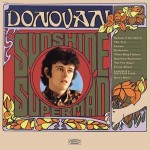
Donovan's Sunshine Superman at 60
 By Harvey Kubernik
Sunshine Superman is the third studio LP by singer-songwriter Donovan. On August 26, 1966, it was released in the United States on Epic Records.
Donovan and his recor
By Harvey Kubernik
Sunshine Superman is the third studio LP by singer-songwriter Donovan. On August 26, 1966, it was released in the United States on Epic Records.
Donovan and his recor -
The Doors new documentary and Live at the Aquarius Theatre: The First Performance

By Harvey Kubernik
The Doors’ 60th anniversary celebration continues with the re-release of Tom DiCillo’s Grammy award-winning documentary film When You’re Strange. Remastered in 4K for the first time, the film will feature an introduction from John Densmore and Robby Krieger and the worldwide exclusive debut of a newly recorded performance of “Riders on the Storm” featuring Densmore, Krieger, and special guests in partnership with Playing For Change. The film will be released worldwide in theaters on December 4th and 6th.
Ticket info for When You’re Strange can be found at WhenYoureStrangeMovie.com.
The Doors took the stage on July 21, 1969 at the intimate Aquarius Theatre on Sunset Boulevard for what would become one of the most captivating—and criminally underrated—performances of their career. Live at the Aquarius Theatre: The First Performance captures Jim Morrison, Ray Manzarek, Robby Krieger, and John Densmore in peak form: loose, loud, and locked in.
On November 21 it was released as a 180-gram 3-LP Set on Analogue Productions. This definitive edition, limited to just 2,000 copies, is pressed at Quality Record Pressings and features a 2016 mix by longtime Doors’ engineer Bruce Botnick, who revisited the original eight-track analog masters for a stunning new high-resolution transfer, using the same lacquer cut by Chris Bellman who did the Record Store Day release in 2016. The result is a crystal-clear, high-fidelity experience that transports listeners straight into the charged atmosphere of that summer night in 1969.
“The new mix is a revelation,” says Botnick in the liner notes, which also feature Robby Krieger, Ray Manzarek, John Densmore, Danny Sugerman (who would go on to become the band’s second manager), music critic and former editor of the Los Angeles Times Robert Hilburn’s review of the show, which originally ran on July 28, 1969, and extensive production notes by Botnick. “It’s almost like hearing the show for the first time. Using tools we didn’t have in 2001, we were able to remove most of the hum and buzz that permeated the original tapes,” says Botnick. “The resulting clarity gives this concert new life—and as a bonus, side six features material from the soundcheck that preceded the show, offering fans something they’ve never heard before.”
The setlist spans the full range of the Doors’ alchemy—part blues ritual, part psychedelic seance. From a swaggering “Back Door Man” to a hypnotic, fever-dream reading of “The End,” the performance unfolds like a trance. Morrison teeters between mystic shaman and wry provocateur; Krieger’s guitar slices through the haze; Manzarek’s keys swirl like a haunted carnival; and Densmore’s pulse keeps it all tethered to earth. Live at the Aquarius Theatre: The First Performance isn’t just a live album—it’s a portal. A snapshot of a band at the height of its creative powers, caught between chaos and transcendence. Pressed on the highest-quality vinyl and restored with unprecedented clarity, this release invites listeners to step back in time and experience the timeless music of the Doors.
In 2011 I spoke with Bruce Botnick and asked what astounds him 40 years later listening to his collaboration with producer Paul Rothchild and the Doors.
“The thing that still works for me is, first and foremost, the music. The musicianship. The performance. And all of those when these guys connected as a unit and became unconscious is good or better than anything I’ve ever heard. And that’s one of the things I have to hand to my friend producer Paul Rothchild. That we went for performance and tried to stay out of it not to become too technically in the front of the albums that were manufactured.
“In the case of the Doors, Paul was the man who drove the train and kept it on the tracks. But the reality is that there were six of us in the studio making these records together. And it wasn’t a matter of one person ‘being the person.’ Paul never took that point. At some point during the relationship and especially when Jim got busted in Miami, where Paul had to step up and take more control. Because somebody had too or otherwise it would have never got done. But generally, his approach was to get the performance. And we weren’t afraid of editing between takes. You get an amazing first verse and second verse and a chorus and verse into the bridge and it would sort of fall apart and we would grab another take that had it and edited it all together. And it was about the performance. It wasn’t about overdubbing. Because in the majority of what the Doors played on their records was played live.”
Over a forty-year period, I interviewed Ray Manzarek a dozen times.
During 2003, I asked him about Botnick and Rothchild, who helmed and guided the Doors in the recording studio.
“Paul Rothchild was the guy who had produced the Paul Butterfield Blues Band and also Love, along with engineer Bruce Botnick. The two of them did those albums together. So, it was a great combination of six guys. That first album was basically the four Doors and the two other Doors in the control room making the sound. We made the music. They made the sound. And they did an absolutely brilliant job. And it was a real joy and a great learning experience.
“Rothchild and Botnick were two alchemists with sound. We were the alchemical music makers but they were alchemists with sound-adding a bit of this-a bit of that. Some reverb. Some high end. Let’s hit it at 20k or 10k. Let’s dial in a bit of bass in there. They were making this evil witches brew concoction as we went along. And the sound just got better and better.”

Ray Manzarek.
(Photo Henry Diltz/Courtesy Gary Strobl, Henry Diltz Archive)
In a 2009 interview, Ray and I discussed the 1969 Doors.
“After The Soft Parade and the Aquarius shows, we said, ‘Let’s go back to the blues. Let’s get dark and funky for Morrison Hotel.’ [Issued in January 1970].
“The Doors are a collective journey that’s a good way of putting it. It’s of course Jim Morrison as the charismatic lead singer, and I’ve got to address Jim Morrison, but it’s Densmore, Krieger and Manzarek (too). It’s a journey of these four guys, The Four Horsemen of The Apocalypse, the diamond-shaped, no bass player that made a five-point pentagram, shape of the diamond. It’s the inverted pyramid, it’s an archetypal journey of four young men into the unconscious, and coming out of that and creating a musical art form.
“The whole Doors’ organ sound, what makes that work, that’s my whole Slavic upbringing. That’s being a ‘Polish Pianist.’ That’s that dark Slavic Stravinsky, Chopin, that great mournful Bartok type thing. Dark, mournful Slavic soul married so perfectly with the southern gothic American Florida ‘Tennessee Williams’ boy poetry, that the two of us went ‘Crunch!” and the whole thing came right together perfectly.
“The Doors were never part of the folk-rock country rock/laid back ‘Peaceful Easy Feeling’ of Los Angeles. The Doors were part of Raymond Chandler, John Fante, Dalton Trumbo. It was the dark streets and The Day of the Locust, Miss Lonelyhearts. That’s where the Doors come from. You see, nobody came here to make it. Jim and I came to go to the UCLA School of film school, and John [University High School] and Robby [Pacific Palisades High School] are natives. Westside boys who surfed for God’s sake. The Doors are LA. The beach, and downtown LA,” Ray summarized.
I remember mulling around the Aquarius on Sunset Boulevard after the Doors’ show and eating with future author Jan Alan Henderson at the Hollywood Ranch Market.
I had to work earlier in the evening before their local appearance at the West Los Angeles Junior College library in Culver City. The school had just opened that month and I had to stack books and magazines for summer school the next morning. It just wasn’t cool for me to ask anyone on the campus to sub and do my $1.35 an hour job in a newly opened facility.
Besides, in November 1968 I had already witnessed a Doors’ concert at the Inglewood Forum.
At the time, I was still upset by the July 3, 1969 swimming pool misadventure sudden death of Rolling Stones’ founder, Brian Jones.
On July 21, 1969 when the Doors gave two performances at the Aquarius Theatre in Hollywood, a poem Jim Morrison wrote for the occasion, Ode to LA while thinking of Brian Jones, was printed as a four-page pamphlet on textured yellow paper with dark green ink, and distributed to concert goers. Morrison’s work is a meditation on the death of Jones.
Last decade I asked two friends of mine who attended the Doors’ Aquarius Theatre booking to reminisce about the event: Musician, singer/songwriter and actor, Bill Mumy and boxing scholar and author Gene Aguliera.
Bill Mumy: The day before Neil Armstrong walked on the moon, I was at the Aquarius Theatre with my Barnes and Barnes partner, Robert Haimer, seeing the Doors. We attended the early show and we got there early and secured seats in the very front row. The gig was great. Morrison was focused and low-key, but he was a mighty force. I thought he looked great. Thick beard, Mexican peasant shirt and orange Aviator sunglasses. Ray wore a white T-shirt. I took several photographs during the gig and have one of the few pics of Morrison onstage looking directly into a camera lens. “Celebration of the Lizard,” “You Make Me Real” and “Soul Kitchen” were highlights for me. The Doors were such a unique band. To this day, I appreciate Morrison’s poetry and lyrics. He was a genuine artist. They all were great and had musical styles that were/are instantly recognizable. I consider myself fortunate to have been there.”
Gene Aguilera: As an inquisitive teenager with a wandering mind, I used to love to look through the Los Angeles Free Press, the infamous, radical, underground newspaper of the ’60s. One day, there it was: a small ad saying the Doors were coming to the Aquarius Theatre on July 21, 1969! Elektra Records, the Doors’ label, had begun a policy of renting the venue on Monday nights (this being the dark night of the play Hair) to showcase their roster. Naturally, I had to go, but was without wheels at that point; so, after much begging (my 16th birthday was coming soon), my aunt, Julie Gillis, agreed to take me and my two cousins to see one of my favorite bands.
As we departed East LA, making our way toward the Sunset Strip, my aunt Julie began to worry about taking her 11-year-old daughter, Debbie, with us. Just a few months earlier in Miami, the Doors’ lead singer Jim Morrison had been arrested for indecent exposure onstage. She said, “What if he takes it out again? I don’t want Debbie to see any of this.” But it didn’t matter to me, there was no other place in the world I would rather be. With its painted psychedelic exterior and an exquisite art-deco interior, we had arrived at the Aquarius Theatre and sat about halfway up from the stage. With the band still reeling from the Miami bust, an aura of danger lurked thick in the air; when suddenly to the stage strolls a dwarf (adding to the circus-like atmosphere), named Sugar Bear, to announce the band, “Ladies and Gentlemen… the Doors!”
We were now ready for the Lizard King. Jim Morrison looked so much different in person than the album covers I had studied; he arrived with sunglasses, a thick beard, and a paunch around his waist. But for this hometown ‘live’ recording Morrison introduced an edgy new trick to his usual theatrical drama. With the spotlight on, Morrison appeared incredulously high up in the rafters, grabbed a rope and swung to the stage, Tarzan-style, leaving the entire crowd gasping at what they saw. My aunt Julie had her coat ready to cover Debbie’s eyes (if Jim was going to whip it out, as he did in Miami), but that never happened, thank God, Morrison instead throwing Styrofoam balls out to the crowd.
In my youthful excitement, I ran toward the stage and caught a few. A pretty hippie girl next to me was disappointed at not catching anything, so I gave her one, and in turn, she gave me a great big kiss; witnessed by all my group. This was the dawning of the age of Aquarius.
##

Jim Morrison
(Photo by Kurt Ingham, courtesy Heather Harris/all rights reserved)
“I knew Jim was a great poet,” Ray Manzarek reiterated to me one afternoon in 1995 as we watched a UCLA NCAA championship basketball game on television with my brother Kenneth, father Marshall and Burton Cummings of the Guess Who.
“See that’s why we put the band together in the first place. It was going to be poetry together with rock ‘n’ roll. Not like poetry and jazz. Or like it, it was poetry and jazz from the ‘50s, except we were doing poetry and rock ‘n’ roll. And our version of rock ‘n’ roll was whatever you could bring to the table. Robby, bring your Flamenco guitar, Robby bring that bottleneck guitar, bring that sitar tuning. John, bring your marching drums and your snares and your four on the floor. Ray, bring your classical training and your blues training and your jazz training. Jim, bring your Southern gothic poetry, your Arthur Rimbaud poetry. It all works in rock ‘n’ roll. Jim was a magnificent poet.”
In July 1995, at the MET Theatre on Oxford Avenue in East Hollywood, I produced and co-curated a month-long Rock and Roll in Literature series with director Darrell Larson and associate producer Daniel Weizmann.
Manzarek, Densmore, and Krieger reunited for us and played “Peace Frog,” “Love Me Two Times,” and “Little Red Rooster” on July 8. Music journalist Kirk Silsbee read from Art Pepper’s Straight Life, John Densmore recited an entry from his new novel, and actor Michael Ontkean recited Ode to LA by Jim Morrison.
Last decade I discussed the Doors and Morrison’s relationship to cinema with novelist Weizmann. He subsequently emailed me Motel Money Murder Madness: Jim Morrison and the Noir Tradition.
“Some like to make fun of Jim Morrison for his poetic ambitions—he was young, ultra-serious, and at times he had the somber college student’s yen for Hamlet-like navel-gazing. What’s more, like Michael Jackson and Elizabeth Taylor, the force of Morrison’s stardom at times threatens to overshadow his artistic gifts. Patti Smith recently wrote that she felt ‘both kinship and contempt’ watching Morrison perform. But Jim Morrison’s lyrics did introduce a whole new and highly literary sensibility to pop music—the Southern California noir of Raymond Chandler and the Southern Gothic tradition of William Faulkner. And pop music has never really been the same since.
“Of course, new things were already happening to the song lyric before Morrison made his move: Dylan shocked the airwaves with biblical passion and Whitmanesque frenzy. The Beatles followed with colorful utopian imagery that had roots in James Joyce, Lewis Carroll, and Edward Lear’s nonsense verse. But nobody brought the gravity, the hard realism and the psychological pressure of noir to the popular song before Jim. He represented a major leap toward adulthood in ’67 and the boomers flipped for it. After a youth saturated with sunshine and goody-goody-gumdrops consumerism, they had secretly been craving just such a counter-move.
“The first album’s shadowy album cover and billboard, shot by Guy Webster, was a knowing nod to noir film posters like Out of the Past and In a Lonely Place. And Jim’s crooner voice and movie-star good looks defied the rock template, as well. But most of all, the words, their impressionistic, nightmare-like alienation, were strange and yet instantly recognizable.
“We can’t know exactly what inspired Morrison to fuse the noir dreamscape to the popular song… but he was a military brat, raised in Florida and New Mexico. The South, with its backwoods quiet, its open highways, its malevolence, and its anti-culture, was in his bones. Throw a UCLA dose of Nietzsche, Rimbaud, the exotica of Eastern philosophy, Jungian psych, and the Native American tragedy into the mix, and you’ve got a potion powerful enough to challenge the lyrical norms as deeply as the sound of Hendrix’s guitar did.
“One of the last of the Venice Beach beatniks, Morrison self-published slim volumes of verse, even at the height of his rock stardom. He certainly had a hard time straddling his roles as shaman, youth leader, pop icon, and serious artist. But he struggled in earnest, and it’s impossible to talk about the Los Angeles tradition that stretches from Chandler, West and Fante to Didion herself, Bukowski and beyond, without seeing Morrison’s part.
“What’s more, for better or worse, whole music genres have Morrison to thank for forging darkness to the pop song. Bowie’s Berlin Trilogy, post-punk, and even grunge couldn’t have happened without him. Some, like the Cult, seemed only to get the histrionics; others, like Jane’s Addiction, reached harder for poetry but lacked the warmth of Morrison’s highly intimate voice. Because, in the end, despite the shaman poses, the billboards and the spotlights, Morrison really portrayed himself as a lone human, in true noir fashion, struggling through the night. He wrote from the personal inner space that is poetry.”
On January 28, 2018, I attended the memorial tribute and service to Rabbi Isaiah “Shy” Zeldin at the Stephen Wise Temple in the Bel-Air neighborhood of Southern California. Rabbi Eli Herscher praised Zeldin’s spiritual and visionary leadership in 1964 as he established an open-minded religious and musical community in the region, perhaps a mile from the UCLA campus where Manzarek and Morrison in 1964 were enrolled as students. From the Bima, Herscher encouraged the congregation of mourners “that today, memory is the only agenda.”
The Rock and Roll Hall of Fame’s Library & Archives on July 10, 2017, invited me to be a guest speaker in their Author Series in Cleveland, Ohio. Before my appearance, one of the curatorial assistants took me into the private air-conditioned storage locker room not open to the viewing public. “We knew you were coming today and pulled out some specific items we wanted you to see.”
I was given an envelope containing Jim Morrison’s UCLA diploma.
It was a signal.
Time to fly back home to Los Angeles. I was immediately reminded of Morrison’s lyric line in “Celebration of the Lizard”: “Tomorrow we enter the town of my birth. I want to be ready.”
Harvey Kubernik is the author of 20 books, including 2009’s Canyon Of Dreams: The Magic And The Music Of Laurel Canyon, 2014’s Turn Up The Radio! Rock, Pop and Roll In Los Angeles 1956-1972, 2015′s Every Body Knows: Leonard Cohen, 2016′s Heart of Gold, Neil Young and 2017′s 1967: A Complete Rock Music History of the Summer of Love. Sterling/Barnes and Noble in 2018 published Harvey and Kenneth Kubernik’s The Story Of The Band: From Big Pink To The Last Waltz. In 2021 the duo wrote Jimi Hendrix: Voodoo Child for Sterling/Barnes and Noble.
Otherworld Cottage Industries in 2020 published Harvey’s Docs That Rock, Music That Matters. His Screen Gems: (Pop Music Documentaries and Rock ‘n’ Roll TV Scenes) is scheduled for a late 2025 publication.
Harvey Kubernik wrote the liner notes to CD re-releases of Carole King’s Tapestry, The Essential Carole King, Allen Ginsberg’s Kaddish, Elvis Presley The ’68 Comeback Special, The Ramones’ End of the Century and Big Brother & the Holding Company Captured Live at The Monterey International Pop Festival. During 2006 Kubernik appeared at the special hearings by The Library of Congress in Hollywood, California, discussing archiving practices and audiotape preservation. In 2017 he lectured at the Rock and Roll Hall of Fame in Cleveland, Ohio, in their Distinguished Speakers Series. Amidst 2023, Harvey spoke at The Grammy Museum in Los Angeles discussing director Martin Scorsese’s The Last Waltz music documentary.
Kubernik is in The Sound of Protest documentary now airing on the Apple TVOD TV broadcasting service. Director Siobhan Logue’s endeavor features Smokey Robinson, Hozier, Skin (Skunk Anansie), Two-Tone’s Jerry Dammers, Angélique Kidjo, Holly Johnson, David McAlmont, Rhiannon Giddens, and more. Harvey is interviewed along with Iggy Pop, Bruce Johnston, Johnny Echols, the Bangles’ Susanna Hoffs and Victoria Peterson, and the founding members of the Seeds in director Neil Norman’s documentary The Seeds: Pushin’ Too Hard now streaming online on Vimeo. This November 16, 2025, a DVD/Blu-ray is scheduled for release via the GNP Crescendo Company.