-
Featured News
Don’t Forget Me – Eddie Cochran documentary set for 2026
 By Harvey Kubernik
Eddie Cochran, guitarist, singer, and songwriter was a pioneering rock and roll icon who left an indelible mark on countless musicians. Dying and just age 21 in 1960, h
By Harvey Kubernik
Eddie Cochran, guitarist, singer, and songwriter was a pioneering rock and roll icon who left an indelible mark on countless musicians. Dying and just age 21 in 1960, h -
Featured Articles
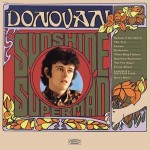
Donovan's Sunshine Superman at 60
 By Harvey Kubernik
Sunshine Superman is the third studio LP by singer-songwriter Donovan. On August 26, 1966, it was released in the United States on Epic Records.
Donovan and his recor
By Harvey Kubernik
Sunshine Superman is the third studio LP by singer-songwriter Donovan. On August 26, 1966, it was released in the United States on Epic Records.
Donovan and his recor -
GIRL TO COUNTRY: A MEMOIR by Amy Rigby

(Southern Domestic, UK, 2026; 280 pages)
She emerged from bohemian New York with a maiden solo album, 1996’s Diary Of A Mod Housewife which shifted what was considered by a struggling music industry to be a “disappointing” 20,000 copies, despite glowing coverage. Her output since has included records with husband Wreckless Eric, the wildest card in Stiff’s pack—who encouraged her to “just get on with” Girl To City, an enthralling no-holds-barred account that left me with hope there’d be a second volume taking a life less ordinary nearer to the present.
Well, here it is: an account of a 35-year-old shaking off the fetters of a deteriorated first marriage, and uprooting to Nashville, the storm centre of what was once regarded as the squarest and, arguably, most lowbrow genre in pop. Yet it began to “celebrate rather than feel ashamed of its homespun history,” comments Amy. Certainly, by the mid-1970s, the Tennessean capital had embraced more generalized output, albeit of a kind not uninfluenced by country & western’s lyrical preoccupations and the kinda tunes folk like a-tappin’ their boot leather to.
As a result, there came to be—as Buck Owens sang in a 1973 B-side—“a songwriter under every rock,” and much of Amy’s domicile in “Music City USA” (or, to Native Americans, “The Land of the Ill Wind”) was spent gravitating back to the Big Apple (most conspicuously to create 2005’s Little Fugitive long-player); on chiefly well-received tours overseas in venues where “the familiar smell of disinfectant mingled with the odour or beer was comforting and anxiety-inducing”—and, most germane to this discussion, camaraderie with such as Skeeter Davis an effervescent regular on the Grand Ole Opry—which is to the C&W entertainer the same as Everest to a mountaineer—and hovering round publishing offices, most of them in close collusion with disc companies and studios on or within hailing distance of Music Row, the Tin Pan Alley of Nashville with its curt brush-offs, unreturned messages and hoity-toity receptionists.
She wasn’t entirely unacquainted with what to expect, having embraced qualified success with the Last Round Up (part of “this crazy new country punk phenomenon”), who’d chanced their arms in the metropolis during the mid-1980s. Therefore, armed with a guitar, demos and an intriguing curriculum vitae, she was poised to supplicate anyone who expressed the vaguest interest or even allowed her past the switchboard.
Up against entrenched inhibitions; “uncomfortably close to being over the hill,” and an “ethos where you only acknowledged success—never failure, fear or uncertainty,” the cardinal sin was to betray visible desperation: too nasty a reminder of the impermanence of stardom and wealth. Nevertheless, when the industry’s fish weren’t biting and left-over copies of her releases were to be destroyed (“the smasher would reduce the music I’d poured my sweat, tears and probably blood into, to useless shards and finally, powdered crystals”), she was obliged to buttress earnings as a performer with “proper” employment, albeit temporary, in a “frozen office park,” grounded by a daughter in tow, whose purpose was not “to take pride is watching your parent work at fulfilling their creative desires”—and her own father’s resumed pleas for her to “face reality and GET A REAL JOB.”
Periodically, it was a tempting prospect for one whose upbringing in “close-knit, provincial Pittsburgh” was blighted by low self-esteem and an associated degree of social anxiety disorder (not helped by persistent teenage acne). “For all my artistic ideals and aspirations,” she sighs, “maybe I just wanted to live a middle-class life, with easy parking and a cute shower curtain.” She was pushed ineffectively in this direction by a rich boyfriend who felt suspicious of every man I came in contact with between the ages of nineteen and ninety,” and of a type close to those outlined in “Needy Men” on Little Fugitive, which earned a justly rave review in The Nashville Scene, a weekly magazine that reflected the cohesion and depth of the region’s popular culture.
After the new century shifted out of neutral too, all signposts began to point towards the link-up with the fellow who “felt like English pop music royalty to me”; moving with Eric to a village in Aquitaine (“thinking how cool it would be to have Richard Coeur de Lion as your neighbour”)—and this inspired, sometimes mildly shocking—and, crucially, always entertaining—study concerned with “trying to find myself outside of the place that defined me.” (Alan Clayson)
Death Trip: Iggy and the Stooges 1972-74 by Michael S. Begnal (Reaktion Books)
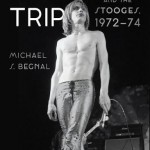
Review by Duncan Fallowell
The Ancient Greeks invented beat music when Crotus, satyr of Mount Helicon, clapped his hands in time to the singing of the Muses. Beat is hypnotic and soon became essential to the public Dionysiac rites in which music, dance, intoxication, and all forms of sexual activity liberated participants from the quotidian. Christianity stamped out the Dionysiac; and it didn’t return in either the Renaissance or the Enlightenment. But it did in my lifetime, in the Rock Revolution that began with the Beatles and reached a climax in the late 1960s and early 70s.
In order to do this, the pop song had to be extended in time. Jazz and funk were too polite.
Progressive rock was composed-through and too fixed. Enter Andy Warhol, the greatest taboo-breaker of the twentieth century. He told his band the Velvet Underground to create extended rivers of throbbing music in live happenings. Long-groove/wall of sound was born. But the Velvets left Warhol’s orbit and went twee.
So where could we Dionysiacs go after this? There were two options. Firstly Can from Cologne, who had come out of the electronic avant garde, discovered beat, and were the first to make long-groove/wall of sound their staple vehicle on LPs – with astounding results. Secondly the Stooges from Detroit. Their second album Fun House (1970) was extreme, not only in the stripped-down roar of the band but also in the lyrics and behaviour of their front man Iggy who lacerated himself in performance. But was it long-groove? In part, yes; and that was clearly their direction.
Then the Stooges disappeared.
Suddenly a London concert was announced: July 15th 1972, the King’s Cross Cinema. It began at midnight. Some concerts transcend their programme to become cultural markers.
Beethoven, December 22nd 1808, Vienna. Judy Garland, April 23rd 1961, Carnegie Hall. And I would add this one. In 1972 theatre-in-the-round, audience participation, performance art were highly current, but they’d never been married to the Dionysiac. In the UK we had a Dionysiac performance artist in Stuart Brisley who put on hair-raising events, cutting up live chickens, throwing blood around. But Stuart didn’t have a band. Iggy certainly did; and on that unforgettable night he became Crotus the Satyr, stripped but not seductive, very confrontational, very strange, his voice ranging from sweet to howl. He repeatedly and violently rushing into the auditorium, prowling, predatory. And he was backed by the most pitiless long-groove/wall of sound I’ve ever heard. The audience was terrified. Finally the band dumped their guitars on the speakers and left the stage, to feedback whines and gurgles. We stumbled into the night bewildered, euphoric. It was the Stooges only appearance outside America. True to performance art, it was not a show, not a repeatable act. It was a one-off and became a legend. That concert is why this book is being published.
Its author was born in 1966, so he wasn’t there. An obsession comes from a desire to reach the unattainable. Much scholarship is driven by this and Begnal is scholarly. Since he can’t experience the Stooges directly he zooms in on the album that followed the London concert, Raw Power, with a forensic examination of how each track came into being. Every reference is immaculately noted. His commitment revs up to an amphetamine squeal.
Begnal’s analysis is a labour of love; and in its way an extraordinary act of performance in itself. However I do feel that it is based on an underlying misjudgement, namely that Raw Power represents the Stooges career high-point simply because it is the first Punk album. Maybe it is the first Punk album. Others have said so. But Punk, for all its seering verve, was a return to snappy little numbers. Begnal’s book duly demonstrates Raw Power’s ancestry in the trad rock catalogue of short songs.
What had happened to the Dionysiac, the long-groove, the unique and special in the Stooges? David Bowie had come into Iggy’s life. Bowie, the genius of rock lieder – and of packaging. Bowie produced Raw Power and packaged Iggy. Perhaps he also gave the album its naff title. When Raw Power was released I remember feeling let down. I gave it a positive review (which Begnal quotes) but more in loyalty and hope than conviction. The promise of Fun House, of King’s Cross, had not been realised.
Dionysiac outburst flared briefly in the Sex Pistols later, then died. As for the book’s title Death Trip – Iggy is still living, comfortably, near Miami. And what of long groove/wall of sound? With the arrival of the 12-inch single, it merged with Disco, Funk and computer electronics, leading to Dance, Trance, Techno, Rave, Drone, and when all that turned into mere knob-twiddling clichés, it slipped over to the classical world where it had always had a sibling, from Corelli to Morton Feldman, and became a fruitful new form among the conservatoire set. You may sometimes hear it, not always shorn of its elemental terrors and drive, on BBC Radio 3’s wonderful New Music Show.
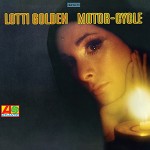
Lotti Golden’s Motor-Cycle Reissued by High Moon Records
By Harvey Kubernik
I remember in late 1969 when an acquaintance of mine, Heather Harris, an editor at the UCLA Daily Bruin Entertainment pages, received a copy of the Bob Crewe-produced Lotti Golden debut LP Motor-Cycle on Atlantic Records.
Harris, and another concert pal of mine, Nancy Rose Retchin at Palisades High School, were big fans of Laura Nyro, and both knew I liked female singers and poets.
In winter of 1969 I first heard Golden’s Motor-Cycle on KPPC-FM in Pasadena, California, and got my own copy of the album at Wallichs Music City in Hollywood. I had read reviews of her in Newsweek and The New York Times when I stocked shelves in the library at West Los Angeles Junior College in Culver City.
Golden’s stream of consciousness lyrics was influenced by the beat generation and Jack Kerouac. Motor-Cycle wasn’t Brill Building pop music, but songs about narcotics, gender identity, the ramifications of involvement, and urban alienation from a Thrill Building tunesmith who was the landlord doing the reporting.
In 1968 and ’69, Heather, Nancy and I went monthly to the Shrine Exposition Hall in downtown Los Angeles for the Pinnacle Dance Concerts. Three former USC students, Sepp Donahower, Mark Chase and John Van Hamersveld, promoted 13 shows of visiting acts and local bands. It was where art, film and music collided. Filmmaker George Lucas was on the Single Wing Turquoise Bird lightshow crew. We saw Moby Grape, Canned Heat, Buffalo Springfield, Jefferson Airplane, Vanilla Fudge, Pogo (pre-Poco), Lee Michaels, Mothers of Invention, Richie Havens, and Sweetwater.