-
Featured News
Don’t Forget Me – Eddie Cochran documentary set for 2026
 By Harvey Kubernik
Eddie Cochran, guitarist, singer, and songwriter was a pioneering rock and roll icon who left an indelible mark on countless musicians. Dying and just age 21 in 1960, h
By Harvey Kubernik
Eddie Cochran, guitarist, singer, and songwriter was a pioneering rock and roll icon who left an indelible mark on countless musicians. Dying and just age 21 in 1960, h -
Featured Articles
Donovan's Sunshine Superman at 60
 By Harvey Kubernik
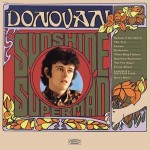
Sunshine Superman is the third studio LP by singer-songwriter Donovan. On August 26, 1966, it was released in the United States on Epic Records.
Donovan and his recor
By Harvey Kubernik
Sunshine Superman is the third studio LP by singer-songwriter Donovan. On August 26, 1966, it was released in the United States on Epic Records.
Donovan and his recor -
GIRL TO COUNTRY: A MEMOIR by Amy Rigby
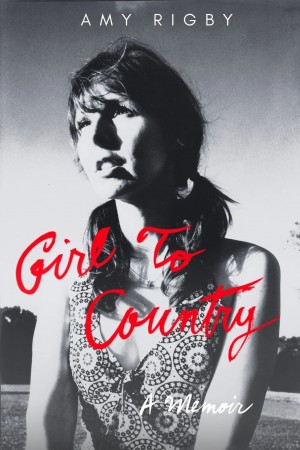
(Southern Domestic, UK, 2026; 280 pages)
She emerged from bohemian New York with a maiden solo album, 1996’s Diary Of A Mod Housewife which shifted what was considered by a struggling music industry to be a “disappointing” 20,000 copies, despite glowing coverage. Her output since has included records with husband Wreckless Eric, the wildest card in Stiff’s pack—who encouraged her to “just get on with” Girl To City, an enthralling no-holds-barred account that left me with hope there’d be a second volume taking a life less ordinary nearer to the present.
Well, here it is: an account of a 35-year-old shaking off the fetters of a deteriorated first marriage, and uprooting to Nashville, the storm centre of what was once regarded as the squarest and, arguably, most lowbrow genre in pop. Yet it began to “celebrate rather than feel ashamed of its homespun history,” comments Amy. Certainly, by the mid-1970s, the Tennessean capital had embraced more generalized output, albeit of a kind not uninfluenced by country & western’s lyrical preoccupations and the kinda tunes folk like a-tappin’ their boot leather to.
As a result, there came to be—as Buck Owens sang in a 1973 B-side—“a songwriter under every rock,” and much of Amy’s domicile in “Music City USA” (or, to Native Americans, “The Land of the Ill Wind”) was spent gravitating back to the Big Apple (most conspicuously to create 2005’s Little Fugitive long-player); on chiefly well-received tours overseas in venues where “the familiar smell of disinfectant mingled with the odour or beer was comforting and anxiety-inducing”—and, most germane to this discussion, camaraderie with such as Skeeter Davis an effervescent regular on the Grand Ole Opry—which is to the C&W entertainer the same as Everest to a mountaineer—and hovering round publishing offices, most of them in close collusion with disc companies and studios on or within hailing distance of Music Row, the Tin Pan Alley of Nashville with its curt brush-offs, unreturned messages and hoity-toity receptionists.
She wasn’t entirely unacquainted with what to expect, having embraced qualified success with the Last Round Up (part of “this crazy new country punk phenomenon”), who’d chanced their arms in the metropolis during the mid-1980s. Therefore, armed with a guitar, demos and an intriguing curriculum vitae, she was poised to supplicate anyone who expressed the vaguest interest or even allowed her past the switchboard.
Up against entrenched inhibitions; “uncomfortably close to being over the hill,” and an “ethos where you only acknowledged success—never failure, fear or uncertainty,” the cardinal sin was to betray visible desperation: too nasty a reminder of the impermanence of stardom and wealth. Nevertheless, when the industry’s fish weren’t biting and left-over copies of her releases were to be destroyed (“the smasher would reduce the music I’d poured my sweat, tears and probably blood into, to useless shards and finally, powdered crystals”), she was obliged to buttress earnings as a performer with “proper” employment, albeit temporary, in a “frozen office park,” grounded by a daughter in tow, whose purpose was not “to take pride is watching your parent work at fulfilling their creative desires”—and her own father’s resumed pleas for her to “face reality and GET A REAL JOB.”
Periodically, it was a tempting prospect for one whose upbringing in “close-knit, provincial Pittsburgh” was blighted by low self-esteem and an associated degree of social anxiety disorder (not helped by persistent teenage acne). “For all my artistic ideals and aspirations,” she sighs, “maybe I just wanted to live a middle-class life, with easy parking and a cute shower curtain.” She was pushed ineffectively in this direction by a rich boyfriend who felt suspicious of every man I came in contact with between the ages of nineteen and ninety,” and of a type close to those outlined in “Needy Men” on Little Fugitive, which earned a justly rave review in The Nashville Scene, a weekly magazine that reflected the cohesion and depth of the region’s popular culture.
After the new century shifted out of neutral too, all signposts began to point towards the link-up with the fellow who “felt like English pop music royalty to me”; moving with Eric to a village in Aquitaine (“thinking how cool it would be to have Richard Coeur de Lion as your neighbour”)—and this inspired, sometimes mildly shocking—and, crucially, always entertaining—study concerned with “trying to find myself outside of the place that defined me.” (Alan Clayson)