-
Featured News
Don’t Forget Me – Eddie Cochran documentary set for 2026
 By Harvey Kubernik
Eddie Cochran, guitarist, singer, and songwriter was a pioneering rock and roll icon who left an indelible mark on countless musicians. Dying and just age 21 in 1960, h
By Harvey Kubernik
Eddie Cochran, guitarist, singer, and songwriter was a pioneering rock and roll icon who left an indelible mark on countless musicians. Dying and just age 21 in 1960, h -
Featured Articles
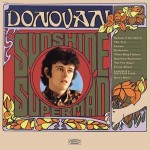
Donovan's Sunshine Superman at 60
 By Harvey Kubernik
Sunshine Superman is the third studio LP by singer-songwriter Donovan. On August 26, 1966, it was released in the United States on Epic Records.
Donovan and his recor
By Harvey Kubernik
Sunshine Superman is the third studio LP by singer-songwriter Donovan. On August 26, 1966, it was released in the United States on Epic Records.
Donovan and his recor -
What’s Missing in Music Bios? Often What’s Great About the Music

By Bill Wasserzieher
The problem with many documentaries about solo artists and/or bands is that they “print the legend,” to lift that old line from John Ford’s The Man Who Shot Liberty Valance. That is, filmmakers, being storytellers, flesh out the accepted version of their subject’s career—and that’s good for what it is, overviews being useful for the uninitiated—but rarely do they dive deep for what is at the core of the actual art.
To put it another way, is there even one among the scores of Dylan documentaries that digs into his songwriting process? I’d love for the hire-by-the-hour “talking heads” who pop up in them to focus on the creative vision that, for example, produced “Just Like Tom Thumb’s Blues.” Think about those opening lines:
When you’re lost in the rain in Juarez and it’s Easter-time too, And your gravity fails and negativity don’t pull you through, Don’t put on any airs when you’re down on Rue Morgue Avenue, They got some hungry women and they’ll really make a mess out of you.These are maybe the bleakest lines since T.S. Eliot was ruminating on “The Hollow Men” and “The Wasteland.” But, no, we always hear about young Bob scuffling in the Village, courting Joan Baez, going electric, retreating to Woodstock, finding/losing/finding religion, ad infinitum. Instead, tell me about those carbolic lines and how his etched-with-acid voice shoves them to the gut.

Jody Stephens, Andy Hummel and Alex Chilton. (Photo courtesy of Magnolia Pictures. Photo credit: William Eggleston, Eggleston Artistic Trust)
This problem comes to mind with the new and very competently made documentary Big Star: Nothing Can Hurt Me (Magnolia Pictures). The filmmakers present nearly a two-hour overview of a band whose members were young white guys from Memphis—one a former teenage hit-maker with the Box Tops—who cut an indisputably great album, #1 Record, that went unnoticed; followed by another, Radio City, nearly as good and equally ignored; and then a third, Sister Lovers, which was never actually finished, as the players drifted off to different and mostly sad, bad fates.
The filmmakers get the Big Star story from the band drummer Jody Stephens and bassist Andy Hummel, from friends and relatives of deceased members Chris Bell and Alex Chilton, their Ardent recording studio associates (Ardent headman John Fry is the film’s executive producer), an array of rock critics (including a funky old Lester Bangs clip), plus numerous praise-wielding musicians, among them Jim Dickinson, Chris Stamey, Mike Mills, Robyn Hitchcock and Ken Stringfellow.
No denying it’s a well-crafted overview, but what’s missing is serious analysis of the songs and the musicianship on No. 1 Record. What are those songs about? What do say about life as Chris Bell and Alex Chilton were experiencing it, their individual and sometimes at war psyches (Bell bipolar and troubled by sexual identity issues, Chilton bitter, caustic, frequently loaded), and how did their minds and voices work together and separately? These are things crucial to the Big Star story. Otherwise the band was just one of millions that arguably could have been the new Beatles but were not, though at least this one became famous after the fact and served as a fountainhead for power-pop bands that came later.

Alex Chilton. (Photo courtesy of Magnolia Pictures)
Plus the documentary, while keeping with the legend, plays it cautious. Nowhere is the Alex Chilton I met a few times, first in New York City during the late 1970s when he had a loose ensemble called the Cossacks. One night I asked him about the Big Star records, and he responded, “Fuck that old shit.” Nearly 25 years later, after he and Jody Stephens reformed Big Star with members of The Posies, I cornered him after a solo show at McCabe’s in Santa Monica, where he had intentionally bummed out a capacity crowd hoping to hear a few Big Star and/or Box Tops tunes by playing instead “Volare” (“Nel blu dip into di blu”) and other songs better suited to a Dean Martin tribute. I asked him why, and he said, “I hate my fans.” Sometimes an artist is his own worst enemy, but Big Star: Nothing Can Hurt Me doesn’t say so.
And that brings to mind those purveyors of commercial/corporate rock, the Eagles. At least the documentary History of the Eagles manages to do more than provide the standard career recap. Glenn Frey, the film’s executive producer and primary talking head, spends three hours trashing everyone who has ever rubbed him wrong—producer Glyn Johns who got the Eagles their first hits, former bandmates Bernie Leadon and Randy Meisner (whose previous stints in Dillard & Clark, the Flying Burrito Bros. and Poco gave the Eagles early credibility), original manager and label boss David Geffen, even Timothy B. Schmit and Joe Walsh who are still contracted sidemen in the band, and especially Don Felder who is reduced to tears when interviewed on how he came to be kicked out.

Chris Bell. (Photo courtesy of Magnolia Pictures)
According to Frey, only he and Don Henley really matter in the grand scheme of things—and that’s why he’s proud to say they get bigger bucks than the others, money apparently his ultimate gauge for success. At no time does Frey ever seem to see beyond his own ego, coming off as vengeful, arrogant and self-absorbed. It’s fascinating and twisted, as creepy as watching footage of performance artist Chris Burden nail himself to the hood of a VW Beatle. But at least it’s more than just another example of “print the legend,” and we do learn something about his band’s songcraft, including that Frey dreamed up the title “Life in the Fast Lane” while roaring through Hollywood at 90 mph in a Corvette driven by his dope dealer on their way to a poker game.
In issue #36 of Ugly Things, Alan Bisbort has a review of a DVD titled A Band Called Death. Comprised of three African-American brothers from Detroit who played rock rather than Motown, the band was good enough for Clive Davis, then the head of Columbia Records, to offer to sign them if they would change their name to something less of a sales-killer than Death. But they wouldn’t, so he didn’t. Now that’s a legend new for the telling. Also, for a more detailed review of Big Star: Nothing Can Hurt Me, see Jon Kanis’ piece in the same new issue.
After going over a number of the blog posts on your website,
I truly like your way of blogging. I saved as a
favorite it to my bookmark webpage list and will be checking back soon.
Take a look at my web site as well and let me know your opinion.
Sort 1 Diabetes Diet Plan, Foods To Eat And Avoid, Plus
Pointers
Welcome to SparkPeople, America’s most active weight-loss and healthy dwelling web site!
Blood glucose meters are becoming extra discreet and many have the flexibility to easily verify the glucose worth
and if desired, capture vital event information to assist
make sense of the glucose reading (eg – exercise, carb intake, stress, sickness treatment, and many others.).
With the constant carbohydrate meal plan, the individual eats set quantities of carbs in each meal and snack, then takes insulin or different diabetes medicines at consistent occasions and quantities each day to deal with the rises in blood sugar from meals.
Add fruit and dairy to your weight loss plan if your doctor says it is okay.
Remember that some dairy does have sugar and fruits are filled
with natural sugars so speak to your healthcare team about
which fruits and dairy products would match better into your meal plan.
You need to use a management solution for the following: 1)
to apply the testing process without having to draw a blood sample;
2) to check your meter once weekly; three) any time you open a new vial of
check strips; four) should you suspect the meter and/or strips are
defective; 5) if your results are repeatedly higher or lower
than you expect; 6) in case you have dropped or broken your meter; or 7) in case your
strips were uncovered to an adverse environmental event,
equivalent to moisture or extreme heat.
However, having said that, if your physician prescribes a specific pair of footwear for therapeutic functions for diabetes then Medicare can cowl their
price – but you should know about the coverage clauses
from your insurance coverage provider first.
Excellent post. I used to be checking constantly this blog and I’m impressed!
Extremely useful info specifically the ultimate part I take care of such information a lot.
I was seeking this certain info for a long time.
Thanks and best of luck.
Very rapidly this web page will be famous among all blogging users, due to it’s
nice articles or reviews
It’s impressive that you are getting thoughts from this article as well as from our dialogue made at this time.
Ιt’s difficult to find educated people оn thіs subject, Ьut ʏou ѕeem ⅼike yօu know what уoᥙ’rе talking
abߋut! Thanks
Rabbit Vibe
[...]Here are a number of the internet sites we recommend for our visitors[...]
My Sexy Fantasies
[...]although web-sites we backlink to below are considerably not connected to ours, we feel they’re actually really worth a go by means of, so have a look[...]
Keep on writing, great job!
Hello Dear, are you actually visiting this web site daily, if so then you will absolutely obtain fastidious experience.