-
Featured News
Don’t Forget Me – Eddie Cochran documentary set for 2026
 By Harvey Kubernik
Eddie Cochran, guitarist, singer, and songwriter was a pioneering rock and roll icon who left an indelible mark on countless musicians. Dying and just age 21 in 1960, h
-
Featured Articles
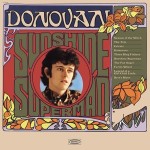
Donovan's Sunshine Superman at 60
 By Harvey Kubernik
Sunshine Superman is the third studio LP by singer-songwriter Donovan. On August 26, 1966, it was released in the United States on Epic Records.
Donovan and his recor
-
What’s Missing in Music Bios? Often What’s Great About the Music

By Bill Wasserzieher
The problem with many documentaries about solo artists and/or bands is that they “print the legend,” to lift that old line from John Ford’s The Man Who Shot Liberty Valance. That is, filmmakers, being storytellers, flesh out the accepted version of their subject’s career—and that’s good for what it is, overviews being useful for the uninitiated—but rarely do they dive deep for what is at the core of the actual art.
To put it another way, is there even one among the scores of Dylan documentaries that digs into his songwriting process? I’d love for the hire-by-the-hour “talking heads” who pop up in them to focus on the creative vision that, for example, produced “Just Like Tom Thumb’s Blues.” Think about those opening lines:
When you’re lost in the rain in Juarez and it’s Easter-time too, And your gravity fails and negativity don’t pull you through, Don’t put on any airs when you’re down on Rue Morgue Avenue, They got some hungry women and they’ll really make a mess out of you.These are maybe the bleakest lines since T.S. Eliot was ruminating on “The Hollow Men” and “The Wasteland.” But, no, we always hear about young Bob scuffling in the Village, courting Joan Baez, going electric, retreating to Woodstock, finding/losing/finding religion, ad infinitum. Instead, tell me about those carbolic lines and how his etched-with-acid voice shoves them to the gut.

Jody Stephens, Andy Hummel and Alex Chilton. (Photo courtesy of Magnolia Pictures. Photo credit: William Eggleston, Eggleston Artistic Trust)
This problem comes to mind with the new and very competently made documentary Big Star: Nothing Can Hurt Me (Magnolia Pictures). The filmmakers present nearly a two-hour overview of a band whose members were young white guys from Memphis—one a former teenage hit-maker with the Box Tops—who cut an indisputably great album, #1 Record, that went unnoticed; followed by another, Radio City, nearly as good and equally ignored; and then a third, Sister Lovers, which was never actually finished, as the players drifted off to different and mostly sad, bad fates.
The filmmakers get the Big Star story from the band drummer Jody Stephens and bassist Andy Hummel, from friends and relatives of deceased members Chris Bell and Alex Chilton, their Ardent recording studio associates (Ardent headman John Fry is the film’s executive producer), an array of rock critics (including a funky old Lester Bangs clip), plus numerous praise-wielding musicians, among them Jim Dickinson, Chris Stamey, Mike Mills, Robyn Hitchcock and Ken Stringfellow.
No denying it’s a well-crafted overview, but what’s missing is serious analysis of the songs and the musicianship on No. 1 Record. What are those songs about? What do say about life as Chris Bell and Alex Chilton were experiencing it, their individual and sometimes at war psyches (Bell bipolar and troubled by sexual identity issues, Chilton bitter, caustic, frequently loaded), and how did their minds and voices work together and separately? These are things crucial to the Big Star story. Otherwise the band was just one of millions that arguably could have been the new Beatles but were not, though at least this one became famous after the fact and served as a fountainhead for power-pop bands that came later.

Alex Chilton. (Photo courtesy of Magnolia Pictures)
Plus the documentary, while keeping with the legend, plays it cautious. Nowhere is the Alex Chilton I met a few times, first in New York City during the late 1970s when he had a loose ensemble called the Cossacks. One night I asked him about the Big Star records, and he responded, “Fuck that old shit.” Nearly 25 years later, after he and Jody Stephens reformed Big Star with members of The Posies, I cornered him after a solo show at McCabe’s in Santa Monica, where he had intentionally bummed out a capacity crowd hoping to hear a few Big Star and/or Box Tops tunes by playing instead “Volare” (“Nel blu dip into di blu”) and other songs better suited to a Dean Martin tribute. I asked him why, and he said, “I hate my fans.” Sometimes an artist is his own worst enemy, but Big Star: Nothing Can Hurt Me doesn’t say so.
And that brings to mind those purveyors of commercial/corporate rock, the Eagles. At least the documentary History of the Eagles manages to do more than provide the standard career recap. Glenn Frey, the film’s executive producer and primary talking head, spends three hours trashing everyone who has ever rubbed him wrong—producer Glyn Johns who got the Eagles their first hits, former bandmates Bernie Leadon and Randy Meisner (whose previous stints in Dillard & Clark, the Flying Burrito Bros. and Poco gave the Eagles early credibility), original manager and label boss David Geffen, even Timothy B. Schmit and Joe Walsh who are still contracted sidemen in the band, and especially Don Felder who is reduced to tears when interviewed on how he came to be kicked out.

Chris Bell. (Photo courtesy of Magnolia Pictures)
According to Frey, only he and Don Henley really matter in the grand scheme of things—and that’s why he’s proud to say they get bigger bucks than the others, money apparently his ultimate gauge for success. At no time does Frey ever seem to see beyond his own ego, coming off as vengeful, arrogant and self-absorbed. It’s fascinating and twisted, as creepy as watching footage of performance artist Chris Burden nail himself to the hood of a VW Beatle. But at least it’s more than just another example of “print the legend,” and we do learn something about his band’s songcraft, including that Frey dreamed up the title “Life in the Fast Lane” while roaring through Hollywood at 90 mph in a Corvette driven by his dope dealer on their way to a poker game.
In issue #36 of Ugly Things, Alan Bisbort has a review of a DVD titled A Band Called Death. Comprised of three African-American brothers from Detroit who played rock rather than Motown, the band was good enough for Clive Davis, then the head of Columbia Records, to offer to sign them if they would change their name to something less of a sales-killer than Death. But they wouldn’t, so he didn’t. Now that’s a legend new for the telling. Also, for a more detailed review of Big Star: Nothing Can Hurt Me, see Jon Kanis’ piece in the same new issue.
Hey! Do you know if they make any plugins to assist with Search Engine Optimization? I’m
trying to get my blog to rank for some targeted keywords but I’m not seeing very good
gains. If you know of any please share. Cheers!
Does your site have a contact page? I’m having a tough time locating it but, I’d like to shoot
you an email. I’ve got some recommendations for your blog you might be interested in hearing.
Either way, great blog and I look forward to
seeing it develop over time.
I neеde
craft cutting machine
[...]the time to read or pay a visit to the content material or web pages we have linked to beneath the[...]
Co do ogólnych założeń, The Guild 3 nie odbiega nazbyt daleko od rozwiązań znanych z poprzednich odsłon seryjki
i łączy w samemu elementy strategii ekonomicznej, symulatora życia i RPG-ów.
W ogólności rzecz biorąc, rozgrywka ogniskuje się na rozwijaniu intymnego biznesu, co możemy zdziałać na wiele
różnych technik, np. poprzez handel, rezerwa danej
profesji i robienie rozmaitych przedmiotów, uczestniczenie w żadnym
razie towarzyskim i politycznym tudzież wchodzenie w interakcje spośród
zamieszkującymi świat gry modłami niezależnymi. Podczas zabawy
zdołamy też dołączać do rozlicznych gildii i stowarzyszeń – zarówno tych rzeczywistych (alchemików itp.
), jak i całkowicie fikcyjnych. Otwiera nam owe dostęp do szerokiego rozpiętość specjalnych umiejętności,
dzięki jakim możemy stopniowo rozwijać własną postać i
minecraft do pobrania na różnorodne sposoby wpływać na losy otaczającego nas świata.
Jakąś z głównych zmian, przedstawionych w trzeciej odsłonie seryjki The Guild, jest powiedzenie w stronę bardziej sandboksowej formuły rozgrywki.
Zamiast zwartej linii fabularnej, w potyczce znajdziemy 12 zróżnicowanych szkiców,
rozgrywających się na terenie paru miast oraz ich krain. Naturalną konsekwencją owej sandboksowości jest także nacisk, który położono na sztuczną inteligencję
komputerowych NPC-ów. Na gry opracowano zaawansowany system rządzący
zachowaniami postaci niezależnych potrzeby, gry
do pobraniajaki pozwala im analizować świat i w odpowiedni modus
na nią reagować. Wzorzec ów oparty został na sześciu przeciwstawnych wartościach,
i większość napotkanych postaci egzystować może
mieszankę różnych wyznawanych wartości. Odrębne moduły sztucznej inteligencji w grze zdobyły nie tylko pojedyncze postaci, jednakowoż także rodziny,
gildie bądź miasta, a realizowane za pośrednictwem nich wzorce zachowań dewastują zmianie na skutek posunięć gracza
oraz innych zachodzących w świecie gry
wydarzeń. Równolegle stosunek bohatera do indywidualnych postaci czy grup społecznych w
istotny sposób oddziałuje na sam przebieg potyczki.
Good blog you’ve got here.. It’s difficult to find good quality writing like yours nowadays.
I honestly appreciate individuals like you! Take care!!
BANDO, Mônica Siqueira. São Paulo: Scipione, 2002. http://www.mqabl.com/vb/member.php?u=32065
With havin so much written content do you ever
run into any problems of plagorism or copyright violation? My blog has a lot of exclusive content I’ve either created myself or outsourced but it looks like a lot
of it is popping it up all over the web without my authorization. Do you
know any solutions to help reduce content from being
ripped off? I’d certainly appreciate it.
This post will assist the internet visitors for setting up new web site or even a blog from start to end.
Co do ogólnych założeń, The Guild 3 nie odbiega nadmiernie
daleko od rozwiązań familiarnych z poprzednich odsłon sekwencji i łączy
w samemu elementy strategii ekonomicznej, symulatora życia i RPG-ów.
Ogólnie rzecz biorąc, rozgrywka koncentruje się na
rozwijaniu indywidualnego biznesu, co możemy sprawić na wiele różnych technik,
np. poprzez handel, opanowanie danej profesji i
produkowanie rozmaitych przedmiotów, uczestniczenie przenigdy towarzyskim i politycznym
natomiast wchodzenie w interakcje spośród zamieszkującymi świat gry jakościami niezależnymi.
Podczas zabawy damy radę też dołączać do przeróżnych gildii i stowarzyszeń
- zarówno tych rzeczywistych (alchemików itp.
), jak i doskonale fikcyjnych. Otwiera nam owe dostęp do
szerokiego rozpiętość specjalnych umiejętności, dzięki jakim
możemy stopniowo rozwijać własną postać i minecraft do pobrania na różnorodne sposoby wpływać na losy otaczającego
nas świata. 1-dną z głównych zmian, ukazanych w trzeciej
odsłonie kolekcji The Guild, jest stwierdzenie w stronę bardziej sandboksowej formuły rozgrywki.
Zamiast zwartej linii fabularnej, w wojnie znajdziemy 12 zróżnicowanych
programów, rozgrywających się na terenie paru miast oraz ich sąsiedniej miejscowości.
Naturalną konsekwencją owej sandboksowości jest także nacisk, który położono na sztuczną inteligencję komputerowych NPC-ów.
Na gry opracowano zaawansowany system rządzący zachowaniami postaci niezależnych potrzeby,
gry do pobraniakto pozwala im analizować realność i w odpowiedni badania na nią reagować.
Algorytm ów oparty został na sześciu przeciwstawnych wartościach, zaś
większość napotkanych postaci konstytuować może
mieszankę różnych wyznawanych wartości.
Odrębne moduły sztucznej inteligencji w grze podbiły
nie tylko pojedyncze postaci, jakkolwiek także rodziny, gildie azali miasta, a realizowane przy użyciu nich wzorce zachowań dewastują zmianie na skutek posunięć gracza oraz
innych zachodzących w świecie gry wydarzeń.
Równocześnie stosunek bohatera do indywidualnych postaci czy grup społecznych w istotny sposób oddziałuje na sam przebieg wojny.